
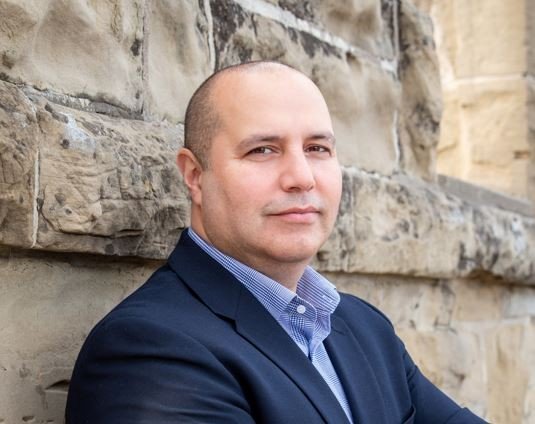
Chris Bakker’s entry into the energy industry began with a practical problem: he needed work. After studying economics, government contracts took him to the Peace Country of northeastern British Columbia, around Dawson Creek and Fort St. John. When those contracts ended, someone suggested oil and gas. His practical instincts suited the work, and he built a career that eventually brought him to Calgary and major energy companies, including Encana, now Ovintiv. There, he worked on commercial negotiations involving facilities and pipelines in the Montney gas region. In 2020, he left to pursue helium exploration with a partner, applying decades of natural gas experience to a resource with different customers, economics, and supply challenges.
Today, Bakker leads Avanti Helium, a Calgary-based public company developing helium resources in western Canada and the United States. The attraction was partly geological. Finding and producing helium draws on familiar exploration methods, drilling equipment, and reservoir knowledge. But Bakker also saw an opportunity in the concentration of global supply and the importance of helium to customers that depend on consistent deliveries. For a team with oil and gas experience, it offered a chance to build a smaller exploration business where a successful well could materially change the company’s prospects. “When you’re small, everything has a huge impact,” he said.
Avanti’s immediate focus is its Sweetgrass project in Montana. According to Bakker, the gas from its wells contains approximately 98% nitrogen, 1% helium, and trace gases, with no natural gas production underpinning the project. The gas travels by pipeline to a processing facility designed to concentrate the helium to approximately 99% before further processing or sale. Making that operation commercially viable starts underground: helium concentration matters, but so do the volume of gas in the reservoir and the rate at which it can be produced. Those characteristics determine whether a discovery can support the expense of wells, processing infrastructure, and delivery.
Bakker said the technical work has progressed more smoothly than the financing. Earlier announcements targeted production in mid-2026, but securing the necessary capital took longer than expected. In the October 22 interview, he said financing anticipated near the beginning of the second quarter closed toward the end of the third, moving the expected production window to late 2026 or early 2027. The funding allows Avanti to cover the remaining work needed to bring the project online. After raising equity during a period of weak share prices, management sought a debt financing structure to limit further dilution, although the RiverFort facility also carries conversion provisions.
A previously operated processing plant is central to that plan. Bakker said the facility was built for another project with a similar gas composition, operated for approximately three months, and was then preserved after that project encountered reservoir problems. Leasing and relocating it offered Avanti a way to avoid the fabrication lead times associated with a new plant. Once production begins, the team will monitor reservoir performance while adjusting the facility to improve recovery and efficiency. “It’s all known equipment, it’s all known technology, but every play is a little bit different,” Bakker said. Expansion will depend on what the reservoir and plant demonstrate in operation.
Securing a buyer before commercial production required another kind of proof. Bakker said Avanti’s first offtake customer was dissatisfied with its existing supplier and wanted to diversify. That commitment helped the company secure financing, while leaving approximately three quarters of anticipated production available for other customers at the time of the interview. Buyers, he said, want confidence that a new supplier can sustain deliveries after they have committed to purchasing its gas. Avanti has made independent reservoir evaluations available to serious prospective buyers, and Bakker emphasized that honoring contracts during shortages is part of the relationship he wants to establish.
Although semiconductor manufacturing and AI infrastructure contribute to the broader helium demand story, Avanti’s current commercial focus is on applications such as MRIs and welding. Bakker said its present processing arrangements do not meet the stringent quality requirements necessary to supply semiconductor manufacturers directly. His argument is that additional helium entering the market can still improve overall availability. Over time, he also expects buyers to place greater value on geographically diverse supply, potentially supporting a larger price premium for dependable North American production.
Beyond Sweetgrass, Bakker wants Avanti to expand both its resource base and its role in delivering industrial gases. Regional distribution centers could receive bulk gas and serve customers within a smaller radius, making shorter trips and smaller orders more economical. That would give customers another purchasing option while allowing Avanti to capture some of the margin between production and final delivery. The immediate priority, however, is getting the first plant operating and establishing consistent performance. For Bakker, the next stage of building Avanti will depend on translating a promising reservoir, secured equipment, and customer commitments into dependable commercial supply.
